Upcoming Concerts
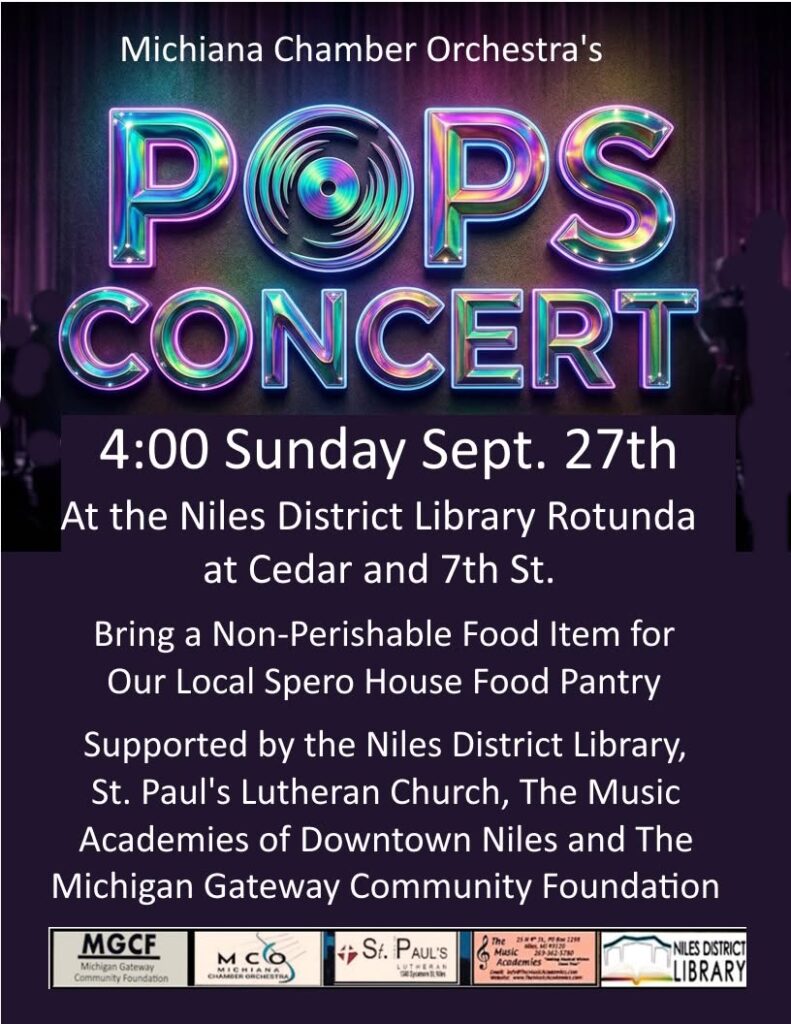
Pop’s Concert
4:00pm Sunday September 27th 2026
Program notes for the 2026 Michiana Chamber Orchestra’s
exciting POPS CONCERT
1. Few motion pictures have captured the spirit of modern America as successfully as the 1994 Academy Award-winning film Forrest Gump.
Composed by Alan Silvestri The music opens with a gentle, reflective melody that captures Forrest’s innocence and optimism before expanding into a warm, soaring musical statement. Throughout the arrangement.
——————————
2, John Whitney’s orchestral arrangement of My Fair Lady captures the elegance, wit, and charm that has made My Fair Lady a timeless favorite.
Audiences will recognize several of the musical’s unforgettable melodies, including “Wouldn’t It Be Loverly,” “The Rain in Spain,” “I Could Have Danced All Night,” “On the Street Where You Live,” and “Get Me to the.”
——————————
3, Few works of musical theater have achieved the worldwide impact and emotional power of Les Misérables.
Bob Lowden’s orchestral arrangement captures the dramatic scope and emotional depth of the original score. Through rich harmonies, memorable melodies, and powerful orchestral colors, the arrangement brings together some of the musical’s most unforgettable themes, including moments of struggle, love, sacrifice, and triumph.
——————————
4, Chicago is the the dazzling tale of fame, ambition, and media sensationalism set during the Roaring Twenties.
This dynamic arrangement by Ted Ricketts captures the energy and excitement of the Broadway production with a selection of its best-loved songs, “All That Jazz,” “Cell Block Tango,” “Razzle Dazzle,” and “Nowadays.” Rich jazz harmonies, driving rhythms, and vibrant orchestration recreate the smoky atmosphere of the Jazz Age
———————————
5. In Through the Years, acclaimed arranger Stephen Bulla brings together a thrilling collection of themes from the Bond franchise into a seamless concert work for full orchestra. The arrangement features five of the series’ best-known selections: James Bond Theme, Goldfinger, Nobody Does It Better, Skyfall, and Live and Let Die.
——————————–
6. Sean O’Loughlin’s The Greatest Showman creates the excitement, emotion, and spectacle of the movie by seamlessly weaving together five of its most memorable songs: “Come Alive,” “The Greatest Show,” “A Million Dreams,” “Rewrite the Stars,” and the inspiring anthem “This Is Me.” Each selection contributes a unique musical character—from dazzling circus energy and heartfelt lyricism to soaring romance and triumphant celebration—creating a concert work that is both entertaining and emotionally satisfying.
———————————–
7. Since its Broadway debut in 2003, Wicked has captivated audiences around the world with its unforgettable music, compelling characters, and imaginative retelling of the classic story of The Wizard of Oz.
Arranger Ted Ricketts’ skillful orchestration captures both the emotional depth and theatrical excitement of the original production including the numbers – No One Mourns the Wicked, The Wizard and I, Dancing Through Life, Popular, and Defying Gravity.
PLACE: Niles District Library
620 E Main St, Niles MI
Bring a non-perishable food item to support our local Spero House Food Pantry.
This event is sponsored by the Niles District Library and the Music Academies of Downtown Niles.